MOROCCO
kingdom of Contrast
Marrakech
the red city
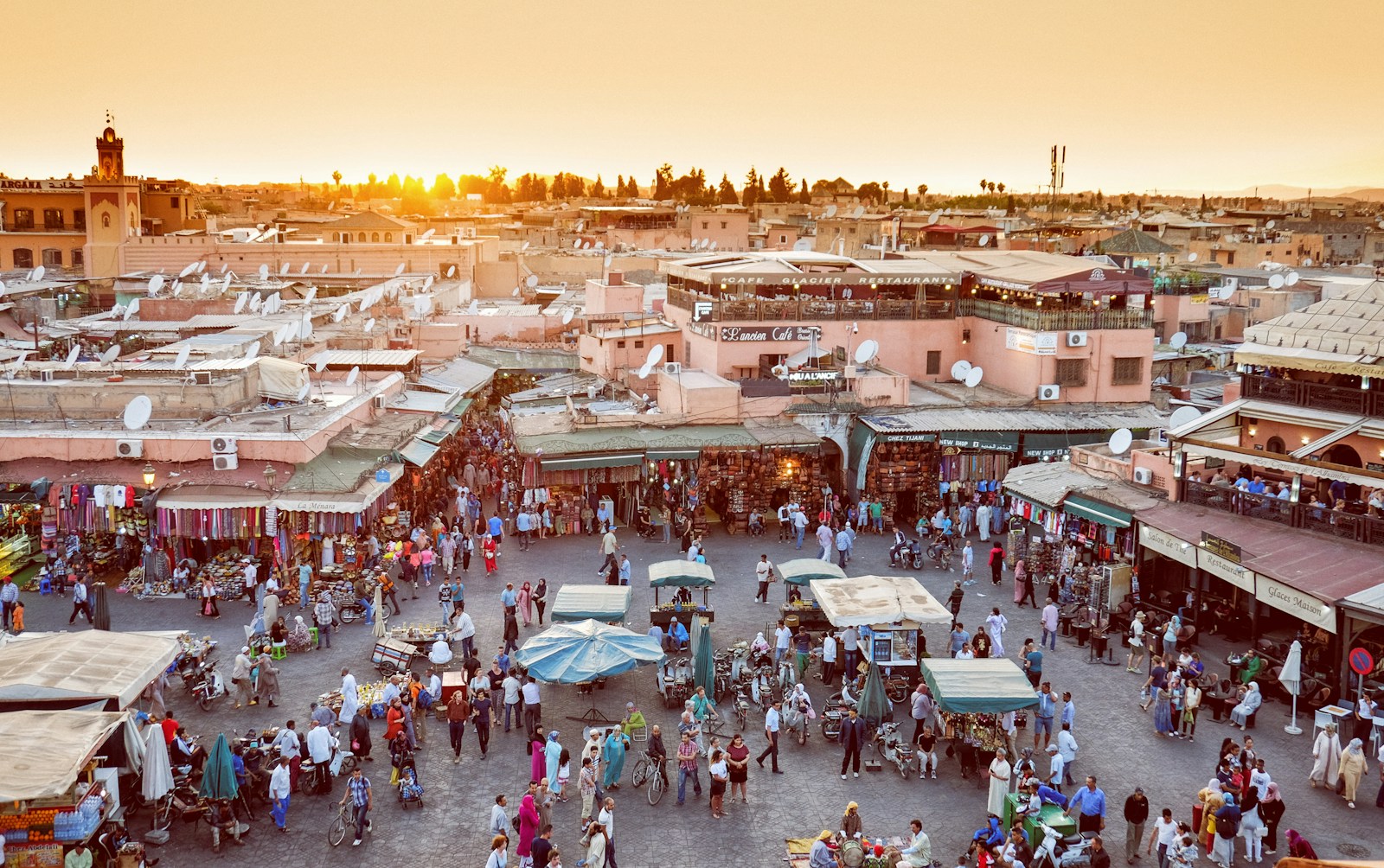
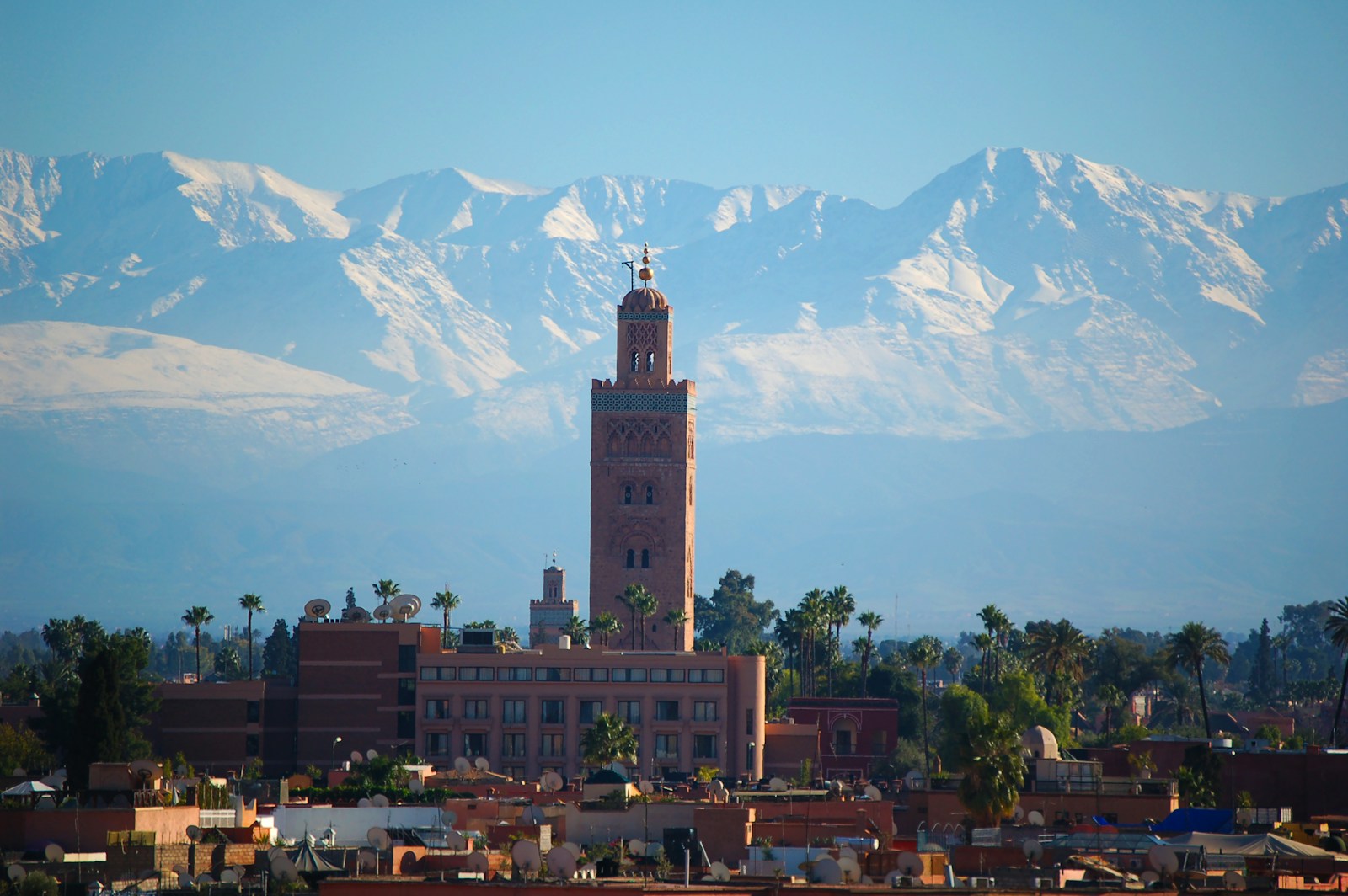
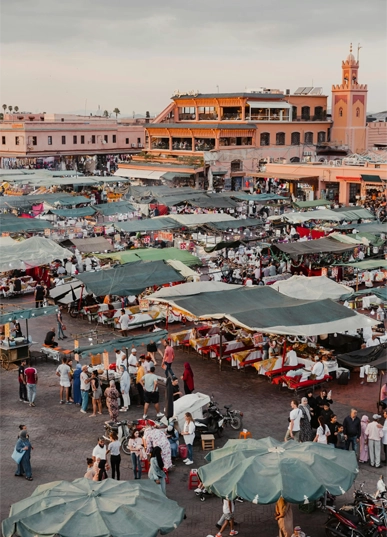
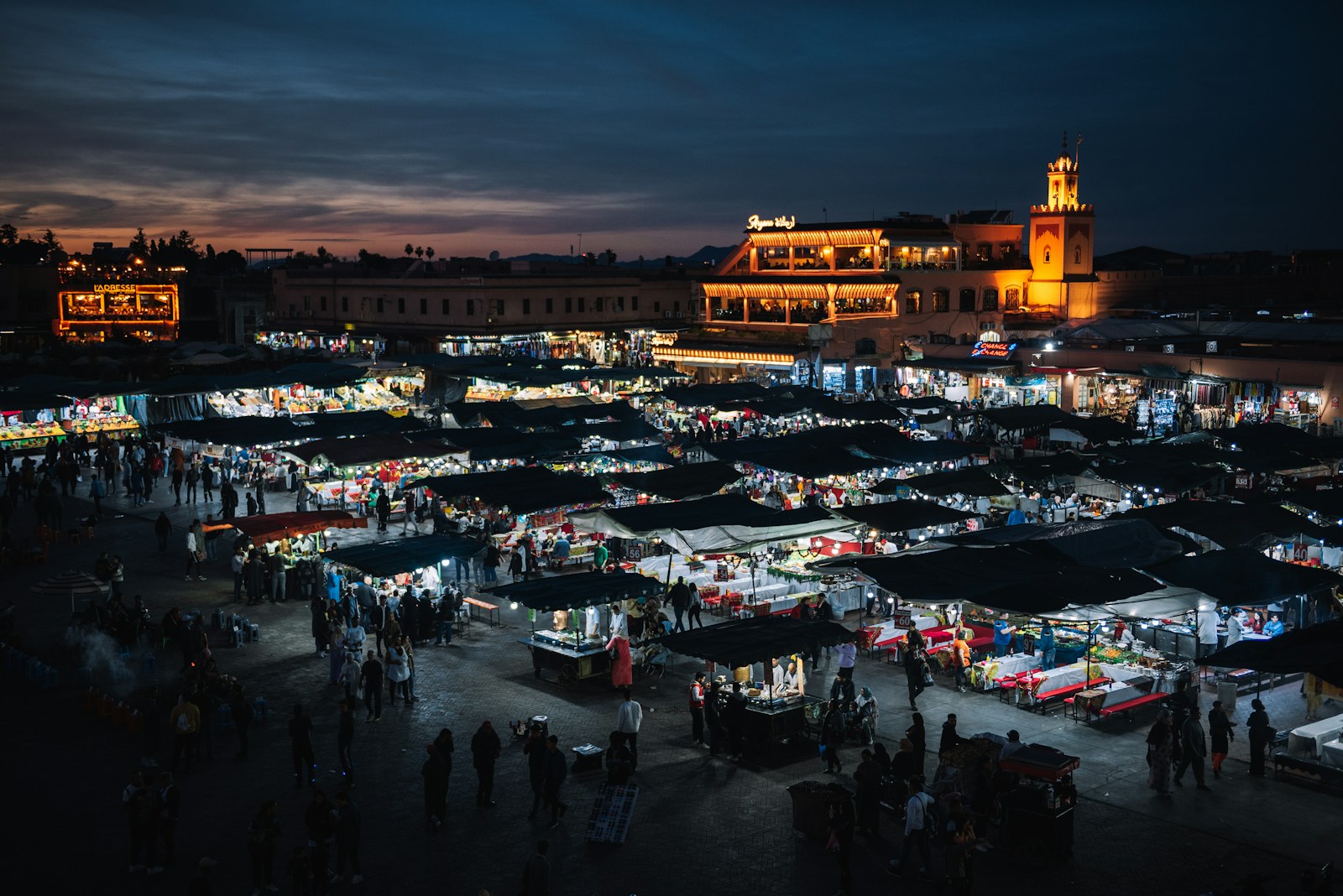
Marrakech is a city of contradictions: a riot of color, sound, and scent where ancient walls cradle modern chaos. Terracotta buildings glow under the Atlas Mountains’ light, alleys twist like memory, and life pulses in Jemaa el-Fna, where storytellers, snake charmers, and food stalls collide. Gardens and palaces offer quiet interludes, while the medina demands curiosity and courage. Marrakech doesn’t wait for you to understand it—it overwhelms, enchants, and leaves a lasting imprint on those who surrender to its rhythm.
Facts sheet
Region: Marrakesh-Safi
Founded: 1070 AD (Almoravid dynasty)
Population: ~4 million metro
Climate: hot summers, mild winters
Famous For: Jemaa el-Fna square, souks, medina, palaces, gardens, Atlas Mountain views
Key Landmarks: Bahia Palace, Saadian Tombs, Koutoubia Mosque, Jardin Majorelle, El Badi Palace
Nearby Natural Sites: Agafay Desert (stone desert), Atlas Mountains, Ourika Valley
Transportation: Marrakech-Menara Airport, buses, taxis, local trains
HIGHLIGHTs
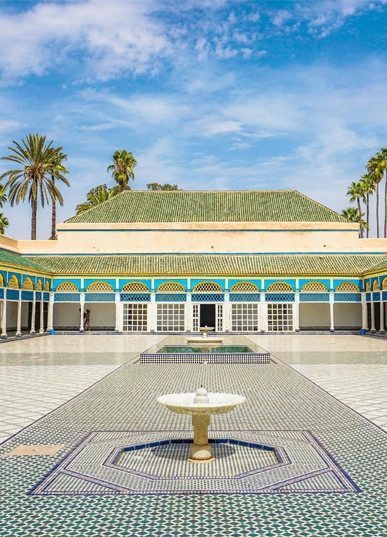
Bahia Palace
Intricate Andalusian design and stillness in the middle of chaos.
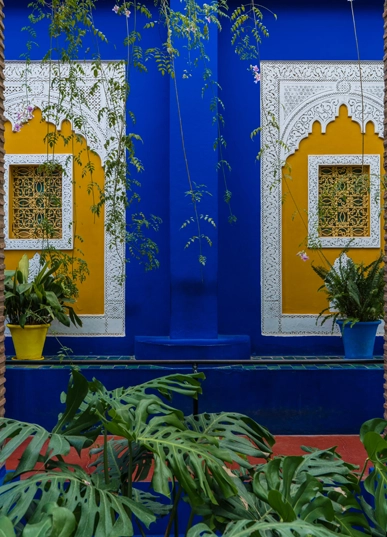
Jardin Majorelle & YSL Museum
Cobalt blue, bamboo shadows, fashion meets myth. A cultivated kind of peace.
Jemaa el-Fna
The city’s pulsing heart. Snake charmers, storytellers, food stalls, madness.
Accommodation Highlight
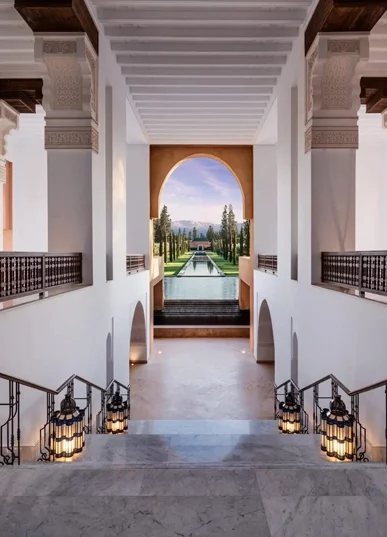
The Oberoi
A retreat built on silence and symmetry. Long reflecting pools, carved domes, and gardens that feel almost outside time. Privacy is the true luxury here.
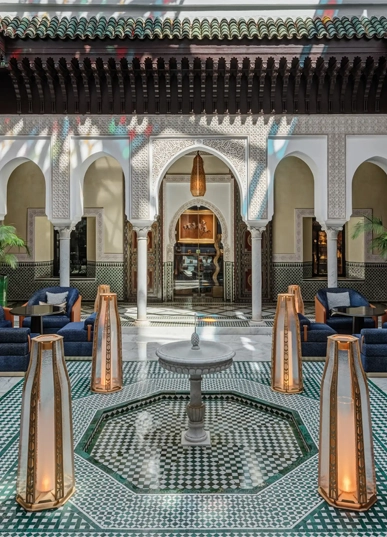
La Mamounia
Marrakech’s grand stage. Decadent, cinematic, unapologetically opulent. Moorish tiles, deep colors, and gardens older than most nations.
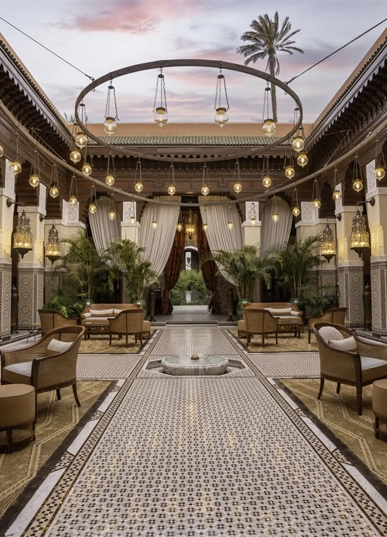
Royal Mansour Marrakech
A masterpiece of Moroccan craftsmanship. Not a hotel—an enclosed world. Private riads instead of rooms, hidden tunnels for staff, and architecture pushed to perfection.
Nearby Sites
Agafay Desert
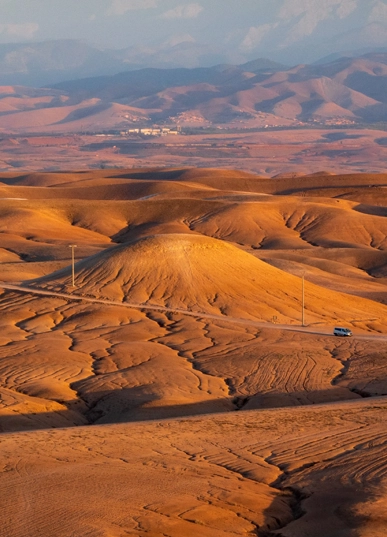
A stone desert carved by wind and silence. No dunes, just raw, lunar terrain. Nights glow with lanterns, stars, and a stillness that strips life down to its essentials.
Atlas Mountains
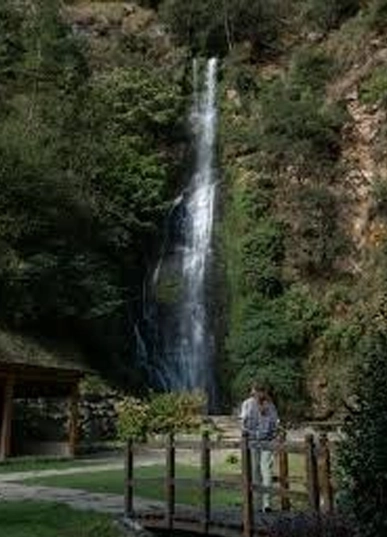
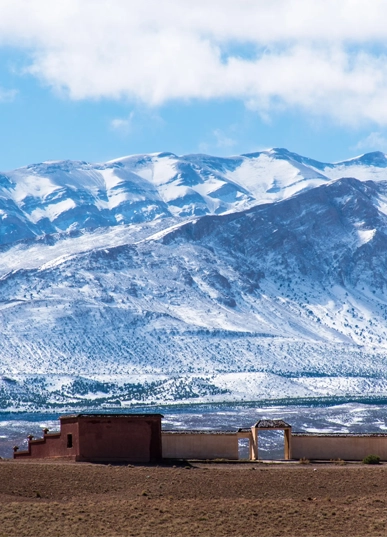
The spine of Morocco. Sharp peaks, deep valleys, Berber villages clinging to slopes. A landscape that humbles you and makes every step feel earned.
Ourika Valley
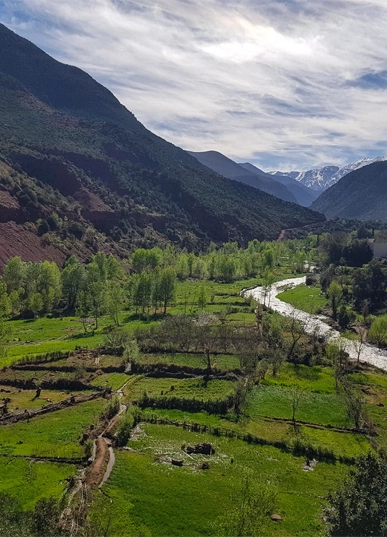
A green corridor at Marrakech’s edge. Rivers, waterfalls, terraced villages. Soft, cooling air after the city’s heat—nature’s brief forgiveness.
HIGHLIGHTs
FES
The Spiritual Heart of Morocco
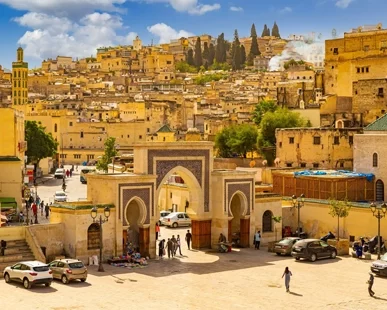
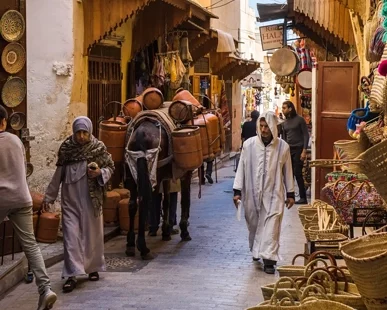
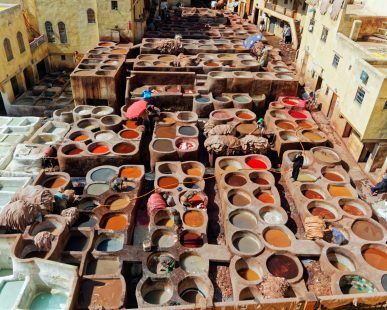
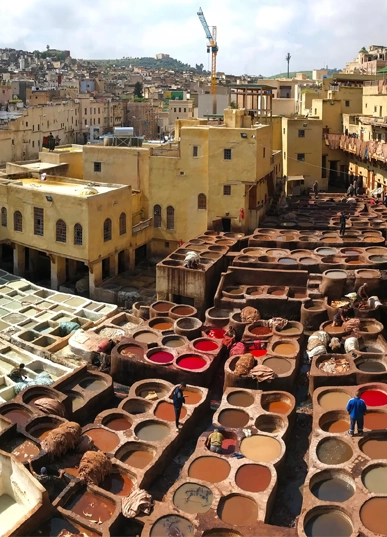
Fes is a city that preserves time. Its medina, Fes el-Bali, is a living labyrinth—tight alleys, hidden courtyards, and artisan workshops echoing with centuries of craft. The scent of leather drifts from Chouara tannery, minarets rise over maze-like roofs, and knowledge lingers in the air of Al Quaraouiyine, the world’s oldest university. Fes doesn’t perform; it reveals. It asks for patience, rewards depth, and pulls you into a Morocco that still speaks in whispers of its medieval soul.
Facts sheet
Region: Fès-Meknès
Founded: 789 AD (Idris I)
Population: ~1.1 million
Climate: dry summer/ cool winter
Famous For: Ancient medina, tanneries, religious schools, traditional crafts
Key Landmarks: Al Quaraouiyine University, Bou Inania Madrasa, Chouara Tannery, Royal Palace Gates, Nejjarine Museum
Nearby Natural Sites: Middle Atlas, Ifrane, Sefrou waterfalls
Transportation: Fes-Saïss Airport, trains, buses, taxis
HIGHLIGHTs
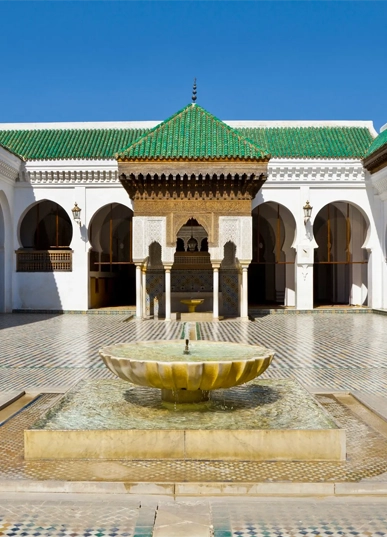
Al Quaraouiyine University
Founded in 859 AD, it’s the world’s oldest continuously operating university and a center of Islamic learning.
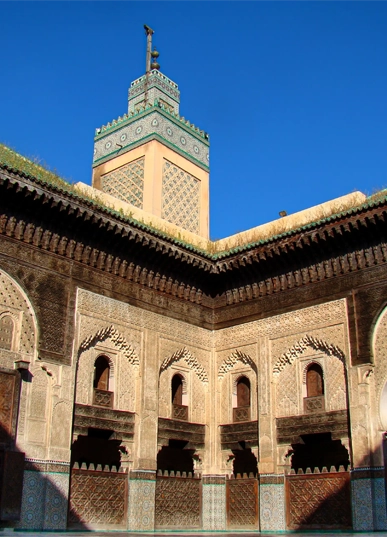
Bou Inania Madrasa
A 14th-century theological college, renowned for its intricate zellij tiles, carved wood, and stucco.
Chouara Tannery
The largest and oldest tannery in Fes, where leather is still dyed using centuries-old techniques.
Accommodation Highlight
Palais Jamai
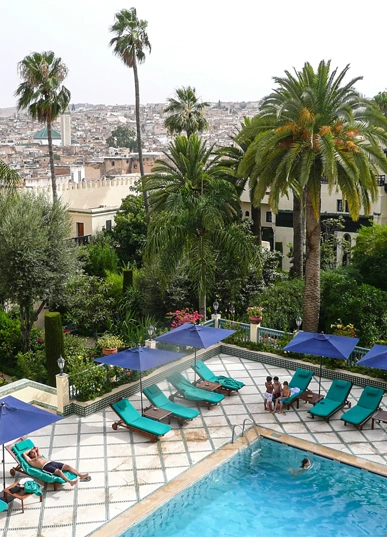
A historic palace overlooking the medina. Its terraces face a sea of rooftops and minarets, capturing the gravity of Fes. Traditional interiors, Andalusian gardens, and a sense of old-world authority.
Riad Fes
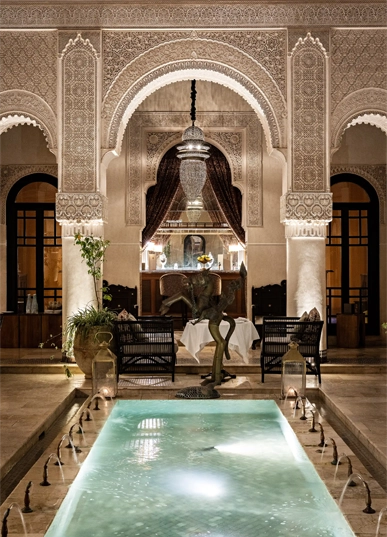
Elegance distilled. Zellij, carved plaster, and cedarwork arranged with restraint rather than excess. Intimate courtyards, quiet terraces, and a view that reveals the medina.
PALAIS FARAJ
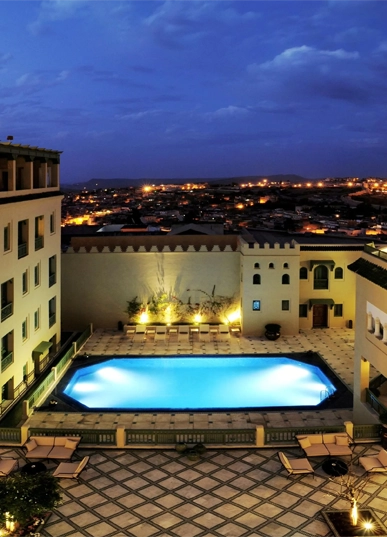
A modern homage to Fes’ craftsmanship. Bright, airy, and geometrically disciplined. Suites framed by arches, panoramic decks, and design that balances authenticity with comfort.
Nearby Sites
Middle Atlas
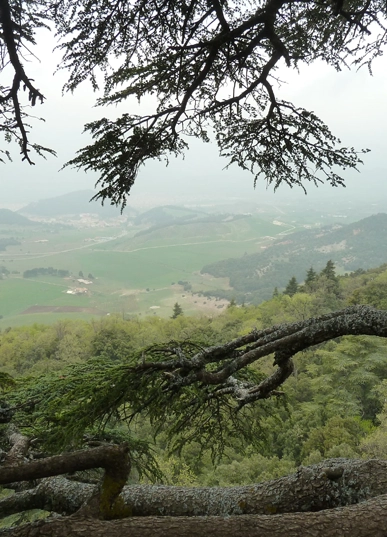
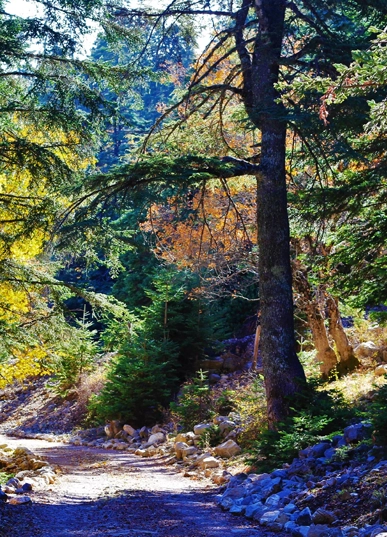
A chain of cedar forests, cool plateaus, and quiet mountain towns. Softer than the High Atlas, but vast enough to reset the mind.
Ifrane
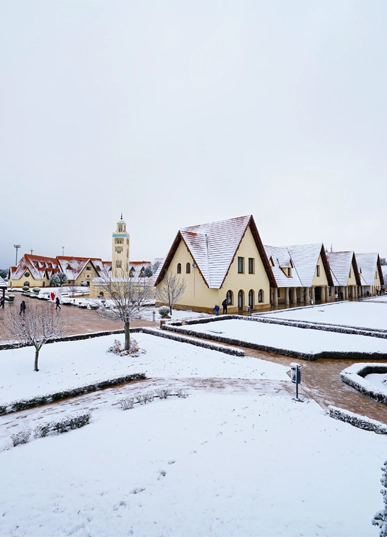
Clean, alpine, almost surreal. Red roofs, cold air, lakes. Morocco’s “Little Switzerland,” built for order in a land of beautiful disorder.
Volubilis
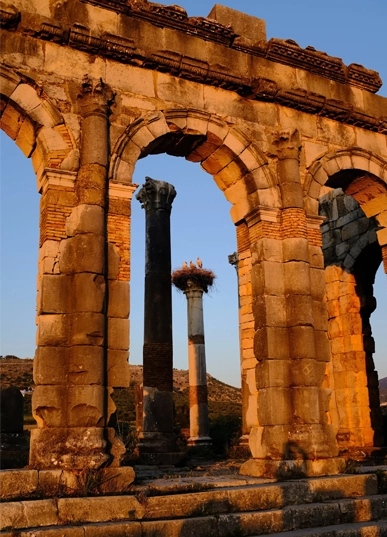
The Roman ghost of Morocco. Marble columns rising from wheat fields, mosaics still breathing color after two thousand years.
Chefchaouen
The Blue Sanctuary
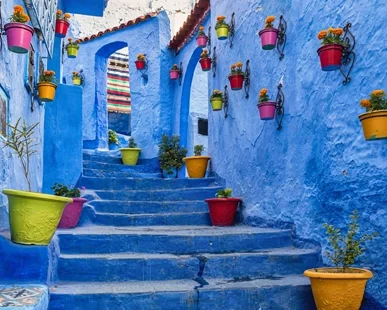
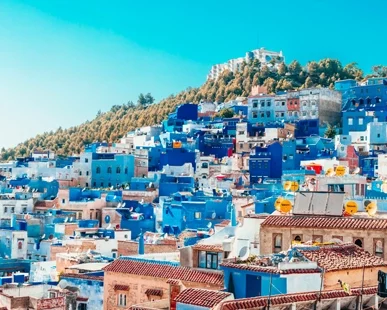
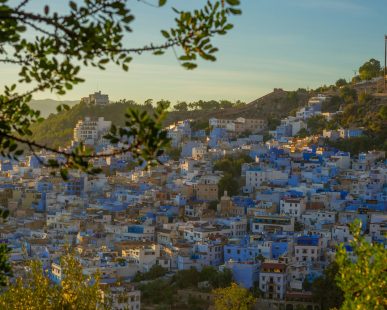
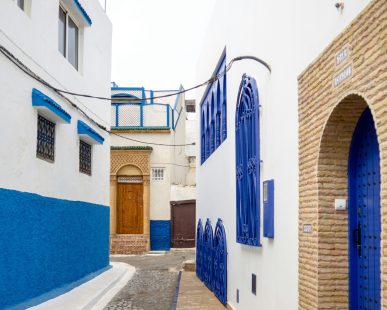
Chefchaouen is Morocco’s exhale. A mountain town washed in shades of blue—indigo, sky, cobalt—each alley a quiet corridor of light. The Rif Mountains rise around it like natural walls, holding the town in a calm that Marrakech and Fes refuse to offer. Cats stretch in doorways, water trickles through stone channels, and the pace slows until you finally hear yourself think. Chefchaouen isn’t about monuments; it’s about atmosphere. A place that cleans the mind.
Facts sheet
Region: Tanger-Tetouan-Al Hoceima
Founded: 1471 (Ali Ben Rachid)
Population: ~45,000
Climate: Warm summer/ mild winter
Famous For: Blue-painted medina, mountain views, relaxed atmosphere
Key Landmarks: Outa el-Hammam Square, Kasbah Museum, Ras El Maa waterfall, Spanish Mosque viewpoint
Nearby Natural Sites:
Akchour waterfalls, Talassemtane National Park
Transportation: Buses, taxis; closest airports are Tangier and Tetouan
HIGHLIGHTs
Outa el-Hammam Square
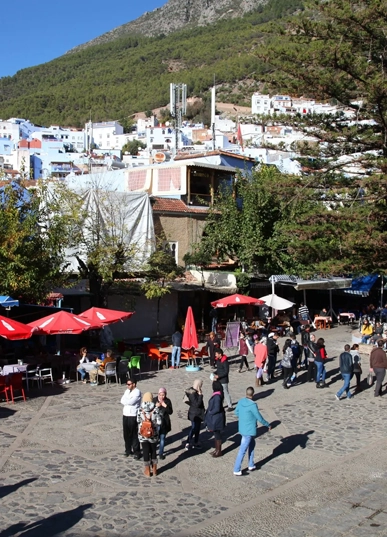
The town’s open heart. Blue alleys spill into a wide, sunlit square where cafés, locals, and travelers blend
Kasbah Museum
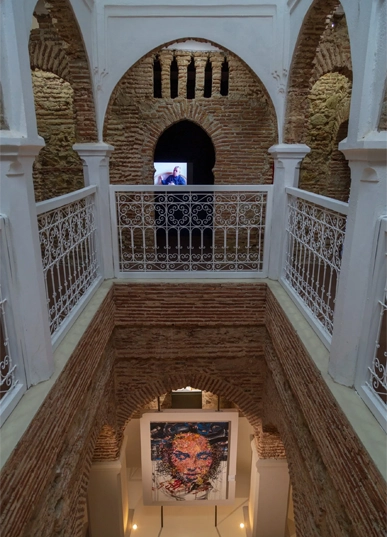
A fortress turned memory keeper. Andalusian garden, old towers, rooms that hold the city’s history.
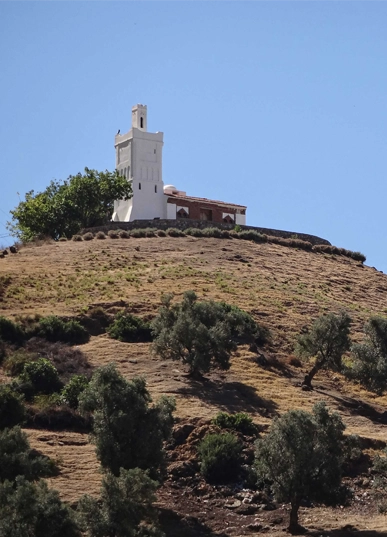
Spanish Mosque viewpoint
The city from above. Blue walls glowing under sunset, mountains fading into violet.
Accommodation Highlight
Dar Jasmine
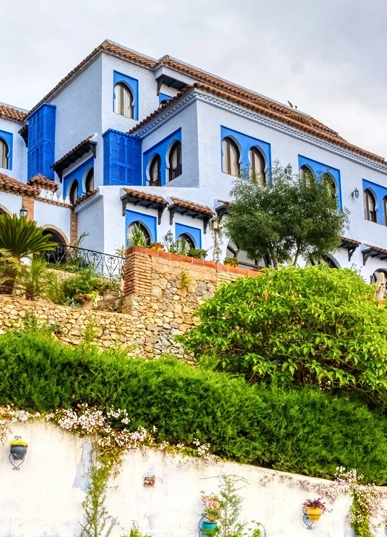
Set on a hillside facing the blue maze. Calm, fragrant, and elevated—literally. Every balcony frames Chefchaouen like a painting. Soft architecture, clean lines, and a sense of distance.
Lina Ryad & Spa
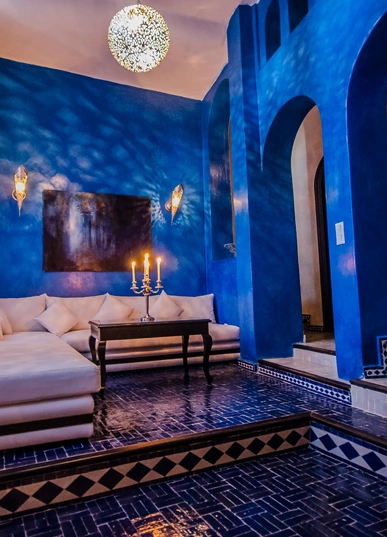
A polished, contemporary riad in the heart of the blue city. Warm interiors, strong light, and a spa that gives the body a rare pause. It blends modern comfort with the town’s signature palette.
Dar Echchaouen
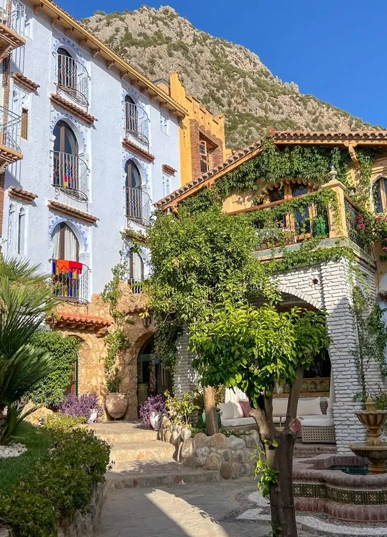
Simple, generous, and grounded. Terraces overlooking Chefchaouen’s blue cascade, gardens, and a quiet pool area that gives space to breathe. It carries the charm of a guesthouse.
Nearby Sites
Akchour Waterfalls
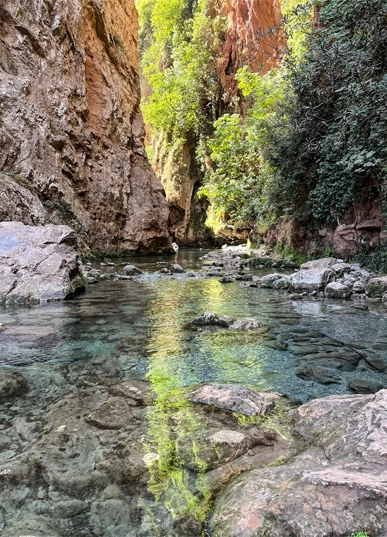
A hidden gorge of turquoise pools and red rock. The path winds through cliffs and cedar shade until the sound of water takes over.
Talassemtane National Park
The wild backbone of the Rif Mountains. Sharp peaks, deep valleys, and forests of fir and oak. Silence broken only by wind and birds.
Sefrou Waterfalls
A calm escape near Fes. Cascades tucked between cliffs, locals swimming, the sound of water replacing the city’s noise.
RABAT
The Quiet Capital
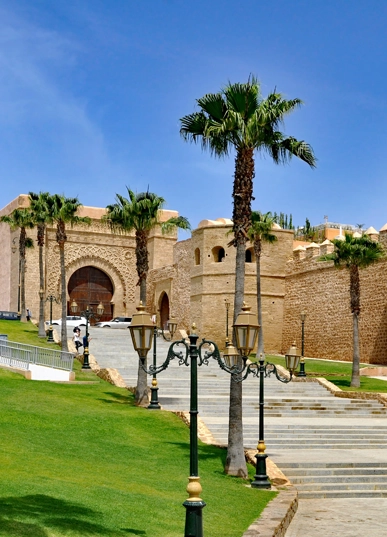
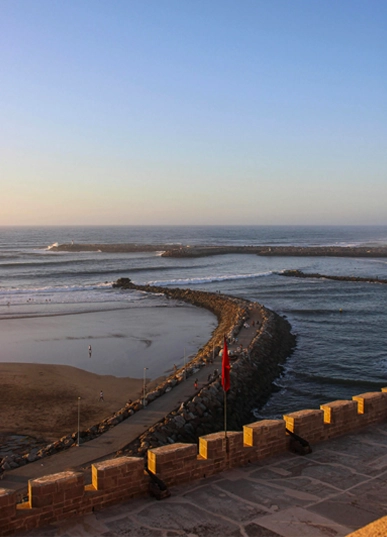
Rabat rejects spectacle. It leads with composure—a coastal city where dignity replaces noise. Wide boulevards, clean lines, and diplomatic calm. The Atlantic air softens everything. The medina is measured, not chaotic; the Kasbah of the Udayas rises like a white-and-blue sentinel above the sea; modern districts shape a city that looks forward without severing its past. Rabat doesn’t seduce—it earns respect. A capital that carries its history without arrogance and its future without hurry.
Facts sheet
Region: Rabat-Salé-Kénitra
Founded: 1471 (Ali Ben Rachid)
Population: ~1.7 million
Climate: Warm summer/ mild winter
Famous For: Political capital, seaside fortifications, royal architecture
Key Landmarks: Kasbah of the Udayas,
Hassan Tower, Chellah Necropolis,
& Royal Palace
Nearby Natural Sites:
Bouregreg River, Atlantic beaches, Sidi Bouknadel Botanical Garden
Transportation: Rabat–Salé Airport, tramway, trains, buses, taxis
HIGHLIGHTs
Kasbah of the Udayas
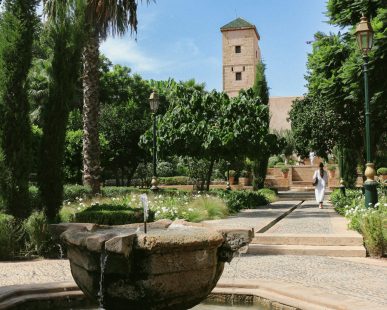
A cliffside fortress facing the Atlantic. White-and-blue alleys, with a garden built for silence and reflection.
Chellah Necropolis
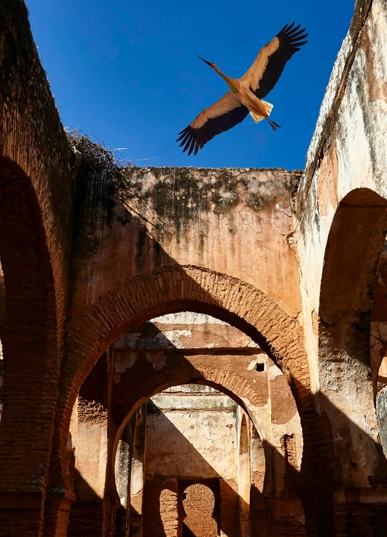
Roman bones and Marinid ghosts. Storks nesting above ruins. Life rebuilding itself over centuries of collapse.
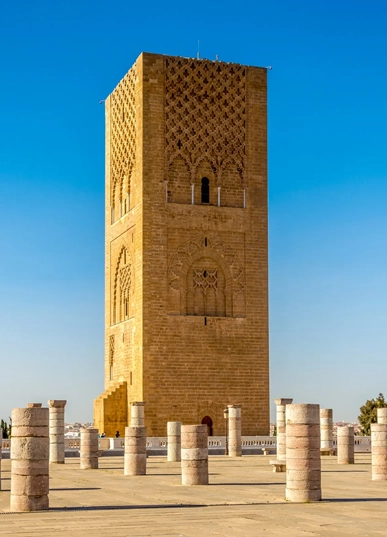
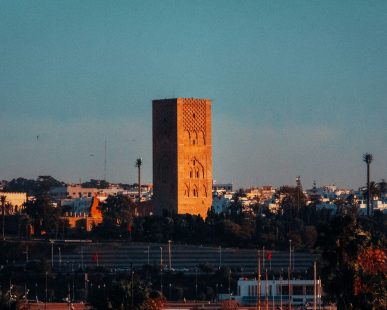
Hassan Tower
The broken ambition of a colossal mosque. A forest of stunted pillars.
Accommodation Highlight
Waldorf Astoria
A luxury escape set in a coastal forest. Calm, secluded, and built around Moroccan craftsmanship. Known for spacious villas, exceptional privacy, and world-class wellness.
Fairmont Residences La Marina
Modern waterfront living on the Bouregreg. Clean lines, panoramic river–ocean views, and direct access to the Marina district’s restaurants and promenades.
The Ritz-Carlton
A palace-style resort inside lush royal gardens. Traditional architecture, serene courtyards, and expansive grounds that create a sense of quiet grandeur.
Nearby Sites
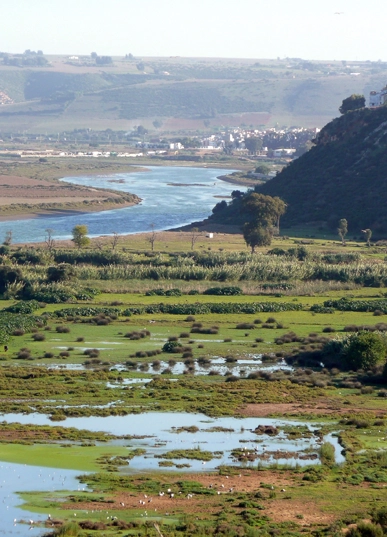
Bouregreg River
The spine of Rabat–Salé. Calm water, long promenades, and a horizon where the river meets the ocean. A natural border that shaped both cities’ history.
Atlantic beaches
Wide, windswept, raw. Strong waves, golden sand, and that unmistakable Atlantic energy. Ideal for surfing, long walks, and watching the sky burn at sunset.
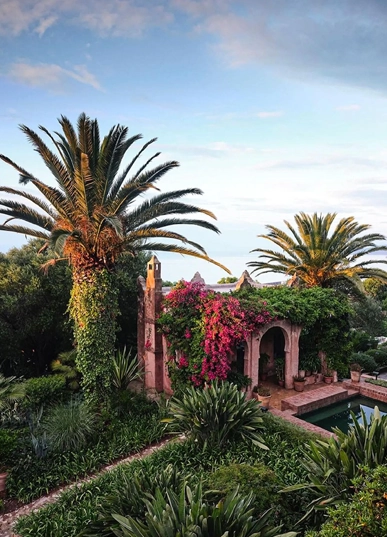
Sidi Bouknadel Botanical Garden
A quiet sanctuary. Structured pathways, global plant collections, and pockets of deep shade. Designed for slow wandering and breathing outside the city’s noise.